Source CE Certified Vegetable Slicer for Cutting Tomatoes, Bread, and Meat
Find and compare 30 CE Certified Vegetable Slicer options from verified Chinese manufacturers. Buyers can evaluate models for cutting tomatoes, bread, and meat with features like manual or automatic operation and stainless steel construction.
Key considerations
Products List


Multifunctional Vegetable Slicer
$50.00 - $55.00
MOQ: 10 Pieces
Hunan Dongfanghong Electromechanical Manufacturing Co., Ltd.

Multifunctional Vegetable Slicer
$50.00 - $55.00
MOQ: 10 Pieces
Hunan Dongfanghong Electromechanical Manufacturing Co., Ltd.


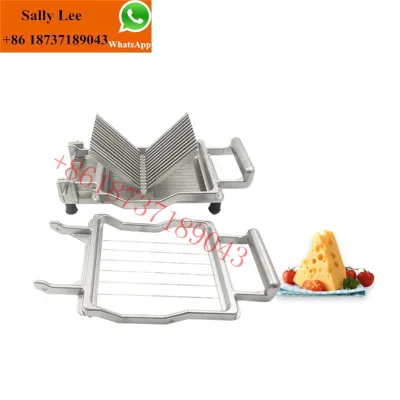


Slicer Fruit Potato Onion Cutter Vegetable Cutter Chopper Vegetable Cutter
$1700.00 - $2000.00
MOQ: 1 Pieces


Comprehensive Sourcing Guide
Strategic Sourcing Guide for CE Certified Vegetable Slicers
Understanding the Product Landscape and Functional Diversity
The market for vegetable slicers encompasses a wide spectrum of equipment, ranging from simple manual tools designed for household kitchens to complex industrial machinery intended for high-volume food processing facilities. When sourcing a "CE Certified Vegetable Slicer," buyers must first recognize that the term "slicer" applies to distinct categories of machinery with vastly different operational parameters. The observed product data indicates a clear bifurcation between manual and automated solutions. Manual units, often constructed from plastic or stainless steel, are typically designed for specific tasks such as cutting tomatoes, slicing vegetables, or preparing bread and pizza. These units frequently operate without a timing device and rely on manual force, making them suitable for applications where precision is required but throughput is low.
In contrast, industrial-grade slicers are engineered for efficiency and consistency. The data reveals that certain models are explicitly classified as "Meat Slicers" or general-purpose cutters with power ratings such as 0.75KW or 1.5KW. These machines often feature automatic grading and are constructed from 304# Stainless Steel to ensure durability and hygiene in commercial environments. The distinction is critical because a CE certification for a manual plastic cutter involves different compliance pathways than that for a high-voltage electric meat slicer. Buyers must align their procurement strategy with the intended application, whether it is for household use, small-scale catering, or large-scale industrial processing. The presence of features like "Eco-Friendly" attributes or specific functions like "Cut up Vegetables" and "Tomato Slices" suggests that product specifications vary significantly based on the target market segment.
Technical Specifications and Operational Parameters
Evaluating the technical specifications of a vegetable slicer is paramount to ensuring the equipment meets operational demands. The supplied data highlights several key technical variables that define a machine's capability. Material composition is a primary differentiator; while some units are made of plastic, industrial models often utilize 304# Stainless Steel, a material known for its corrosion resistance and ease of cleaning, which is essential for food safety compliance. Power requirements also vary, with observed electric models operating at 220V and consuming power ranging from 0.75KW to 1.5KW. This variance necessitates a thorough review of the facility's electrical infrastructure before procurement.
Physical dimensions and packaging standards are equally important for logistics and installation. The data shows a wide range of standard dimensions, from compact units measuring 33x10.3x12cm to large industrial machines with dimensions such as 780x560x736mm or 750x500x1070mm. These dimensions directly impact the floor space required for installation and the shipping logistics involved. Packaging methods also differ, with options including cartons, color boxes, and wooden crates. For heavy industrial machinery, wooden crates are often the standard to prevent damage during transit, whereas smaller units may be shipped in cartons. Buyers should verify that the packaging standard matches the fragility and weight of the specific model to avoid damage during shipping. Additionally, the automation level is a critical specification; while some units are non-automatic, others are fully automatic, which influences labor costs and production speed.
Compliance Verification and Certification Protocols
The core keyword "CE certified" implies adherence to European safety standards, but the verification process requires diligence. The provided data lists specific certifications such as CE, SGS, ISO, BV, and QS. It is crucial to understand that the presence of these certifications on a product listing does not automatically guarantee that every unit sold meets the current regulatory requirements. Buyers must request valid, up-to-date certification documents from the supplier rather than relying solely on marketing claims. The CE mark indicates conformity with health, safety, and environmental protection standards for products sold within the European Economic Area. However, the scope of this certification can vary depending on the machine's complexity. For electric models, compliance with Low Voltage Directive (LVD) and Electromagnetic Compatibility (EMC) directives is typically required.
The data also references other standards like ISO and SGS, which often relate to quality management systems and material testing. While these are valuable indicators of a supplier's commitment to quality, they are distinct from the mandatory CE marking. Buyers should verify that the specific model number, such as XJT-FQ003 or QSJ-F06-MB, is explicitly covered by the provided certification documents. Furthermore, the origin of the product, noted as China or China Shandong in the data, does not preclude CE compliance, but it does necessitate a review of the manufacturer's quality control processes. The "After Sales Services Provided" attribute, which mentions engineers available to service machinery overseas, is a strong indicator of a supplier's ability to support compliance and maintenance, but this should be confirmed in the contract.
Cost Drivers and Procurement Economics
The pricing of vegetable slicers is influenced by a complex array of factors, including material costs, automation levels, and certification expenses. The observed price range in the market spans from $1.72 to $6,450, reflecting the vast difference between a simple manual plastic cutter and a fully automated industrial stainless steel slicer. The lower end of the spectrum typically corresponds to manual, non-electric units with basic functionality, while the higher end includes electric models with significant power output, advanced automation, and robust construction materials like 304# Stainless Steel.
Minimum Order Quantity (MOQ) is another significant cost driver. The data indicates an MOQ range from 1 to 3,000 units. For buyers seeking a single unit for a small business or pilot program, the ability to order a single piece is advantageous. However, for large-scale procurement, negotiating an MOQ of 3,000 units may result in significant per-unit cost savings. Customization is another variable; while some products are listed as "Non-Customized," others offer "Customized" options. Customization, such as altering dimensions or adding specific features, will invariably increase the unit cost and potentially extend the lead time. Buyers must balance the need for specific features against the budget constraints, understanding that a CE-certified, customized industrial slicer will command a premium over a standard, off-the-shelf model.
Supplier Evaluation and Service Capabilities
Selecting a reliable supplier is as critical as selecting the right machine. The data highlights several attributes that can aid in supplier evaluation, particularly regarding after-sales support and manufacturing capabilities. A key indicator of a robust supplier is the provision of "Engineers Available to Service Machinery Overseas." This service capability is essential for industrial buyers who require technical support, troubleshooting, and maintenance assistance that may not be available locally. The presence of a "3 Years" warranty on certain models also suggests a higher level of confidence in product durability and manufacturer support.
When evaluating suppliers, buyers should look for evidence of a comprehensive quality management system. The mention of certifications like ISO and SGS in the product data suggests that the manufacturer adheres to international standards. However, buyers should verify the scope of these certifications to ensure they cover the specific manufacturing processes involved. Additionally, the "Condition" of the product, listed as "New," is a basic requirement, but buyers should also inquire about the manufacturing process, such as "Thermal Processing," to understand the quality of the final product. The origin location, such as "China Shandong," provides context for the supply chain but should not be the sole determinant of supplier quality. Instead, buyers should focus on the supplier's track record, responsiveness, and ability to provide detailed technical documentation.
Quality Control and Long-Term Procurement Considerations
Ensuring the long-term reliability of a vegetable slicer requires a proactive approach to quality control and maintenance planning. The data indicates that some machines are made of plastic, while others use stainless steel. Plastic components may degrade over time or be less suitable for high-temperature environments, whereas stainless steel offers superior longevity and hygiene. Buyers should prioritize materials that align with their specific operational environment. For instance, in a high-moisture or high-acid food processing environment, 304# Stainless Steel is often the preferred choice due to its resistance to corrosion.
Maintenance is another critical consideration. The "After-Sales Service" attribute suggests that some suppliers offer ongoing support, but buyers should clarify the terms of this support. Does it include spare parts availability? Is there a response time guarantee for emergency repairs? The "3 Years" warranty mentioned in the data is a significant factor, but buyers must understand what is covered and what is excluded. Additionally, the "Automatic Grade" of the machine affects maintenance requirements; automatic machines generally have more complex mechanical and electrical components that require specialized maintenance. Buyers should establish a maintenance schedule and ensure that their staff is trained to operate and maintain the equipment properly.
Application-Specific Selection and Integration
The final step in the sourcing process is matching the slicer to the specific application. The data lists various functions, including cutting vegetables, tomatoes, and preparing bread, pizza, and cake. This diversity underscores the importance of selecting a machine that is specifically designed for the intended task. A manual cutter designed for tomatoes may not be suitable for slicing meat or bread, and an industrial meat slicer may be overkill for a small kitchen. Buyers should also consider the "Function Type," which is listed as "Unitary" for some models, indicating a single-purpose design.
Integration into existing workflows is another consideration. The dimensions of the machine, such as 615x525x500mm or 780x560x736mm, must fit within the available workspace. The power requirements, such as 220V and 0.75KW or 1.5KW, must be compatible with the facility's electrical system. Furthermore, the "Timing Device" attribute, which is listed as "Without Timing Device" for some models, may be a critical factor for applications requiring precise control over slicing speed or duration. Buyers should conduct a thorough needs analysis to ensure that the selected slicer meets all operational requirements and integrates seamlessly into the production line.
Comparative Analysis of Key Product Attributes
To facilitate a clearer understanding of the differences between available options, the following table summarizes key attributes observed in the product data. This comparison highlights the trade-offs between manual and automatic, plastic and stainless steel, and various power configurations.
| Attribute | Manual / Household Unit | Industrial / Electric Unit |
|---|---|---|
| Material | Plastic, ABS Plastic | 304# Stainless Steel |
| Power Source | Manual (Non-automatic) | Electric (220V) |
| Power Rating | N/A | 0.75KW to 1.5KW |
| Dimensions | 33x10.3x12cm to 45x40x80cm | 615x525x500mm to 780x560x736mm |
| Packaging | Carton, Color Box | Wooden Crate, Wooden Case |
| Certifications | CE, SGS, ISO (Varies) | CE, SGS, ISO, BV, QS |
| Warranty | Variable | Up to 3 Years |
| After-Sales | Limited | Engineers Available Overseas |
| Typical Use | Vegetables, Tomatoes, Bread | Meat Slicing, High-Volume Processing |
This table illustrates that while manual units offer affordability and simplicity, industrial units provide the durability, power, and support necessary for commercial applications. Buyers must weigh these factors carefully to make an informed decision that aligns with their specific procurement goals. By adhering to the principles of evidence-based sourcing and verifying all claims against the provided data, buyers can navigate the complex market of vegetable slicers with confidence and precision.
FAQs
What certifications do CE certified vegetable slicers typically hold?
CE certified vegetable slicers often hold CE, SGS, ISO, BV, and QS certifications. These documents verify compliance with safety and quality standards for machinery sold in the European Economic Area and other regions.
Which materials are used for industrial vegetable slicer construction?
Industrial vegetable slicers are commonly constructed from 304# Stainless Steel to ensure durability and hygiene. Some smaller manual units may use plastic, but stainless steel is preferred for commercial food processing environments.
Can I find manual vegetable slicers with specific functions?
Yes, manual vegetable slicers are available with functions like cutting vegetables, slicing tomatoes, and preparing bread. These non-automatic units are often designed for household or small-scale applications without complex power requirements.
What power ratings are available for electric vegetable slicers?
Electric vegetable slicers typically operate at 220V with power ratings ranging from 0.75KW to 1.5KW. The specific power requirement depends on whether the machine is designed for light household use or heavy industrial processing.
How are vegetable slicers packaged for international shipping?
Vegetable slicers are packaged in cartons, color boxes, or wooden crates depending on the size and weight. Industrial machines often require wooden crates for protection, while smaller units may ship in standard cartons.
What after-sales services are provided for industrial slicers?
Suppliers often provide engineers available to service machinery overseas for industrial slicers. Some models also come with a 3-year warranty to ensure long-term operational reliability and support for maintenance needs.
Which product models are available for custom vegetable slicing?
Product models like XJT-FQ003 and QSJ-F06-MB are available with customization options. Buyers can select between customized or non-customized units based on their specific production requirements and volume needs.